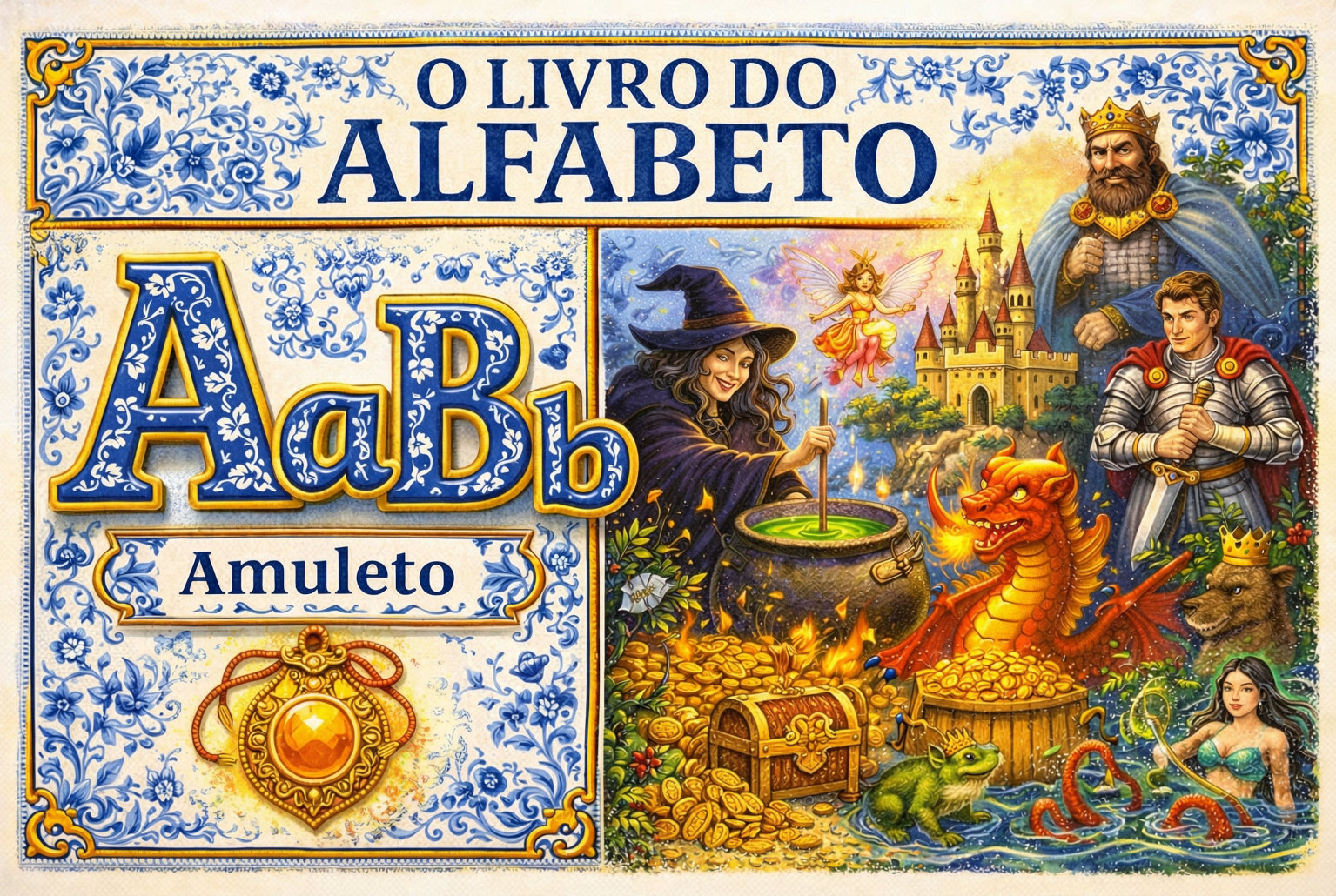
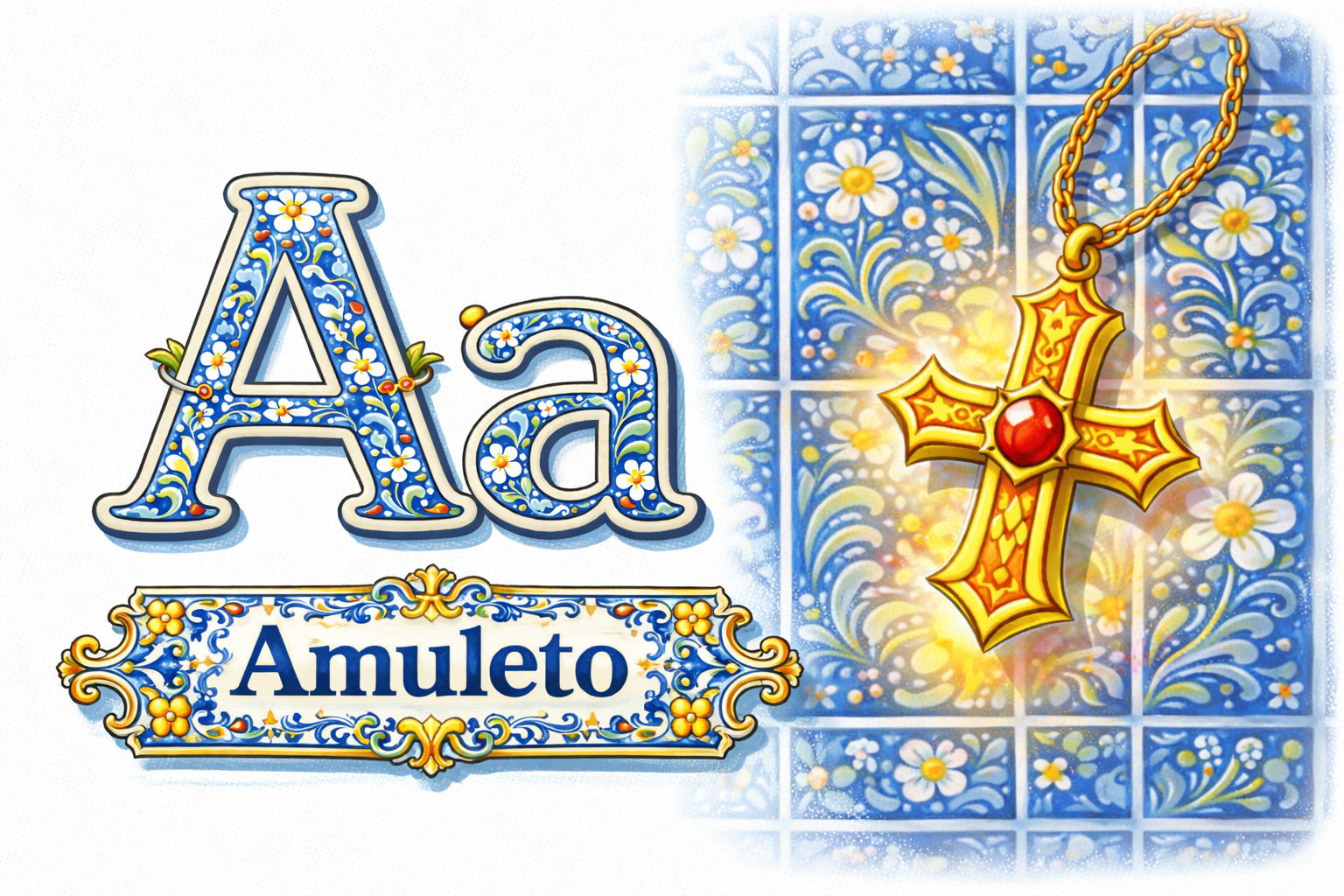
An amulet is a small lucky charm people wear to feel protected. In stories, an amulet often helps the hero when things get scary or difficult. In Portuguese, the letter A is called “á” (roughly like “a”).
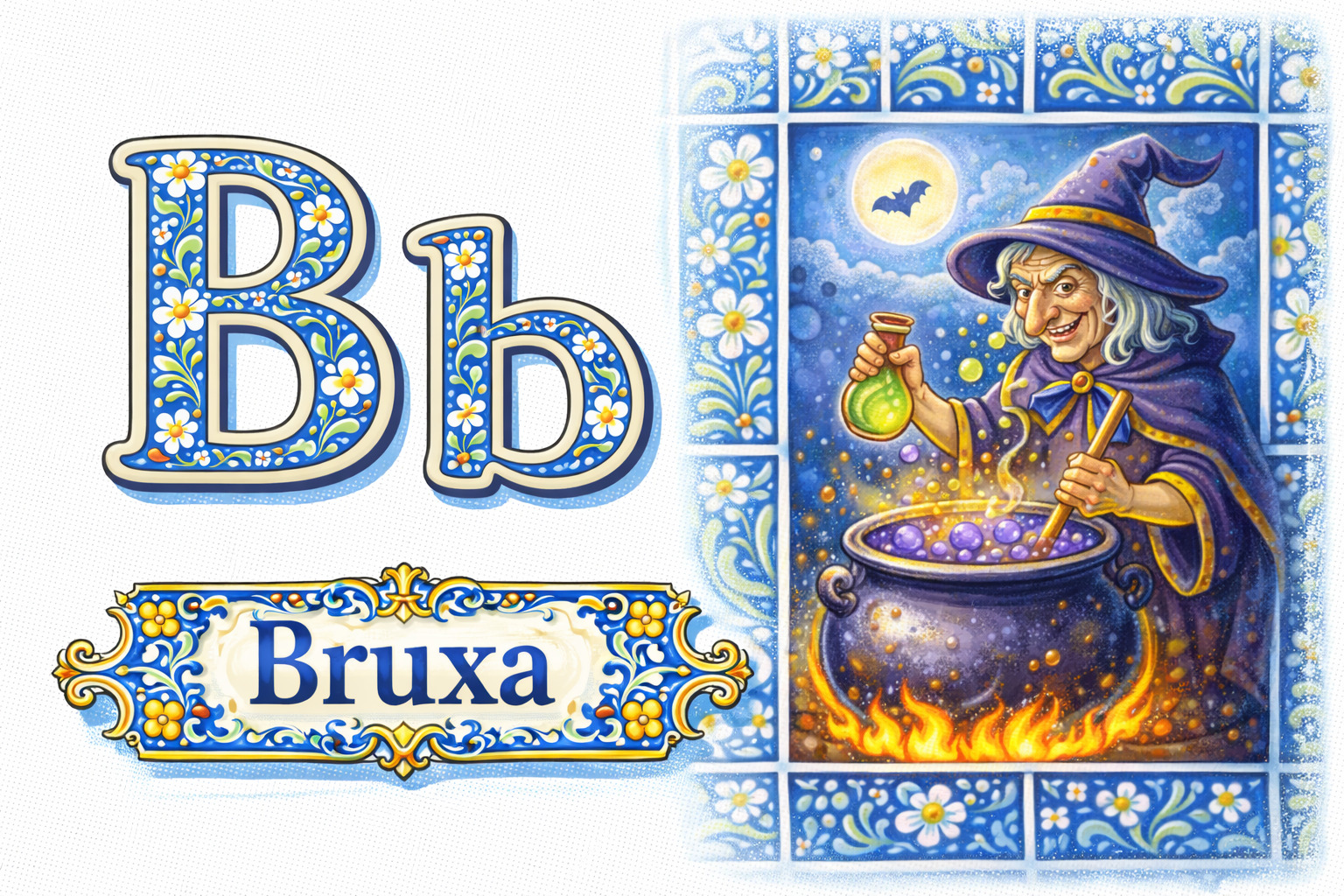
BbBruxa
A witch is a story character who can do magic and brew potions. She might be a tricky villain or a helpful spell-caster, depending on the tale. In Portuguese, the letter B is called “bê” (roughly like “be”).
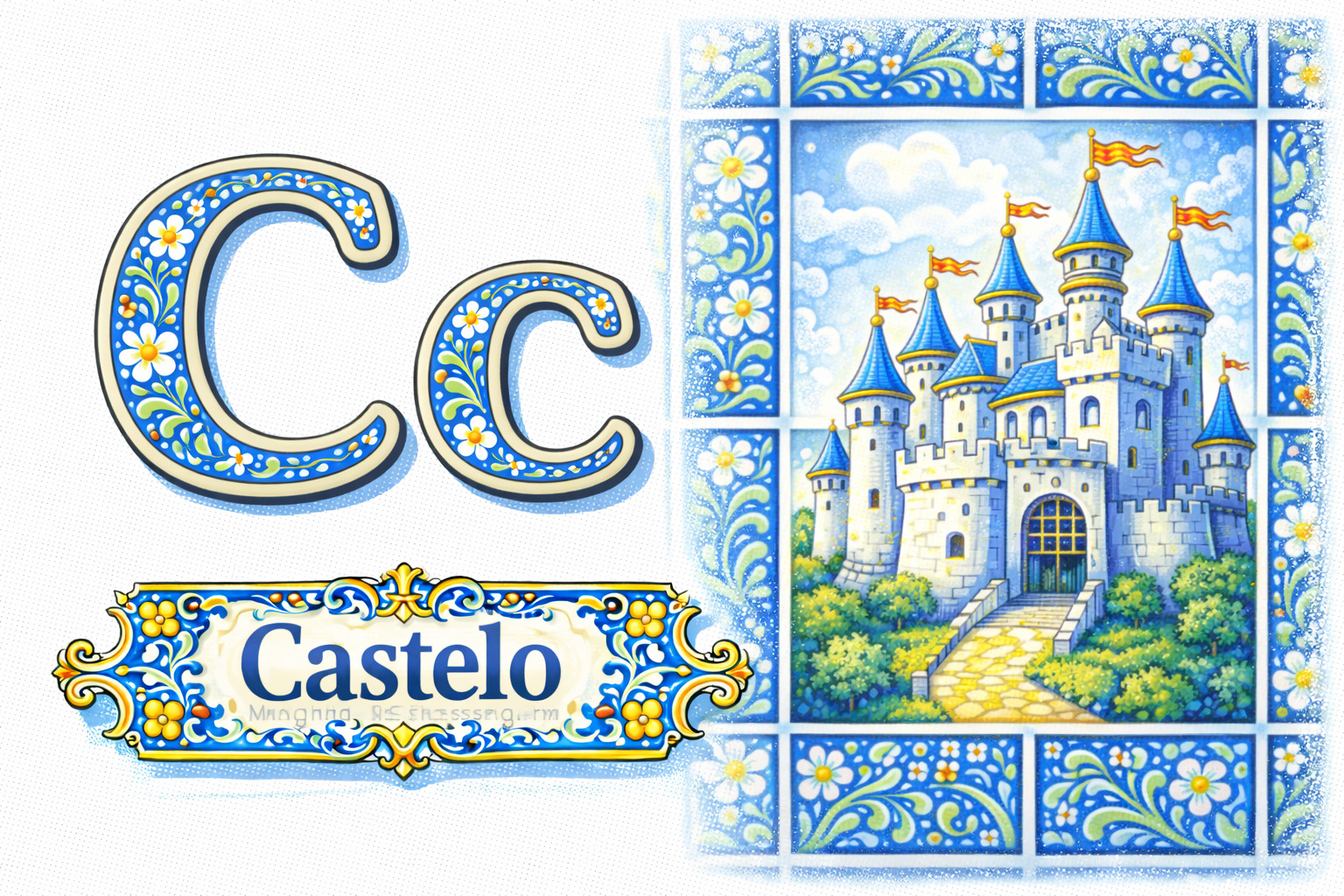
CcCastelo
A castle is a big fortress-like home with towers and thick walls. In fairy tales, kings, princesses, and knights live there, and adventures happen inside. In Portuguese, the letter C is called “cê” (roughly like “se”).
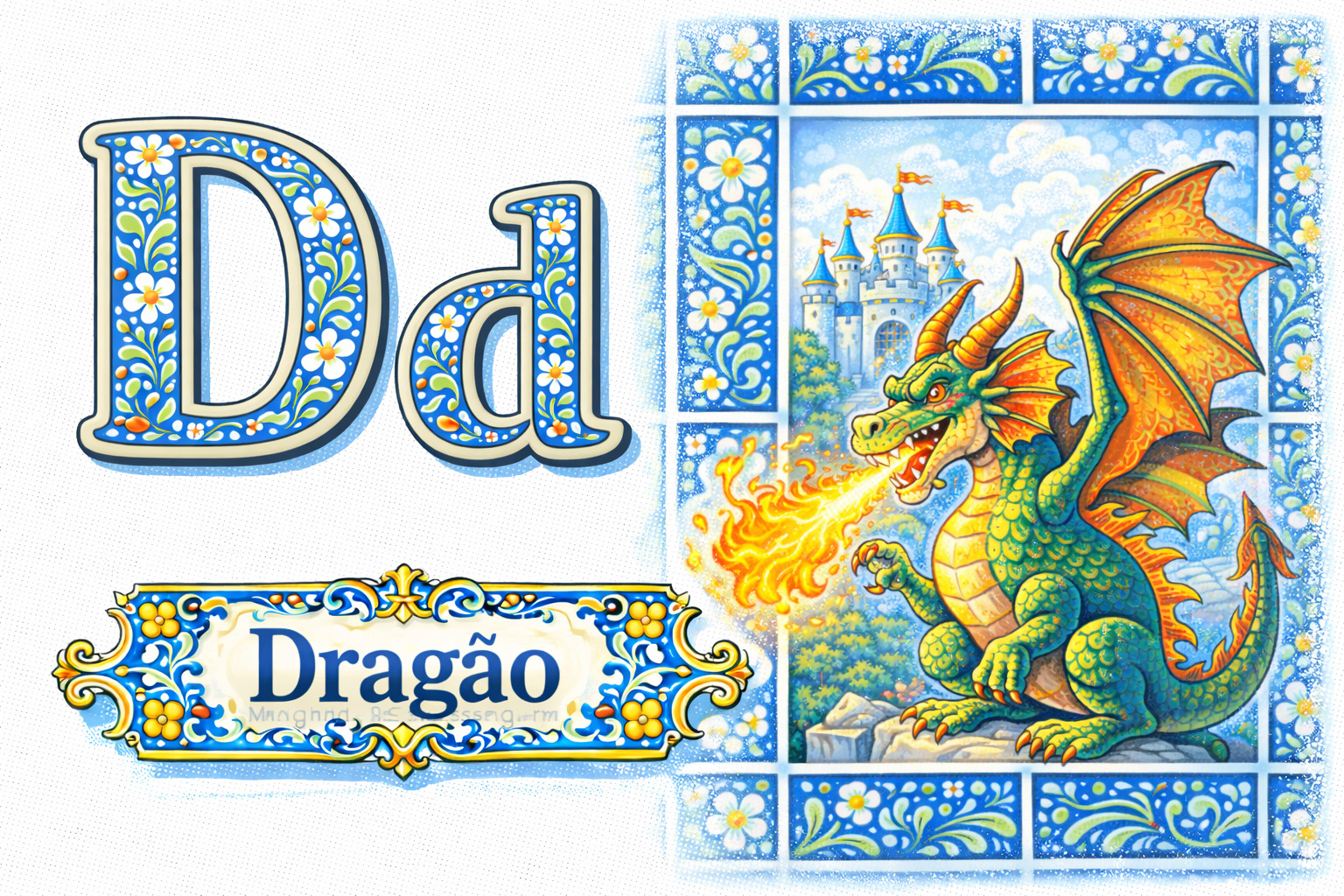
DdDragão
A dragon is a huge story creature with wings, claws, and a powerful tail. Sometimes it guards treasure, and sometimes it becomes a friend—stories decide! In Portuguese, the letter D is called “dê” (roughly like “de”).
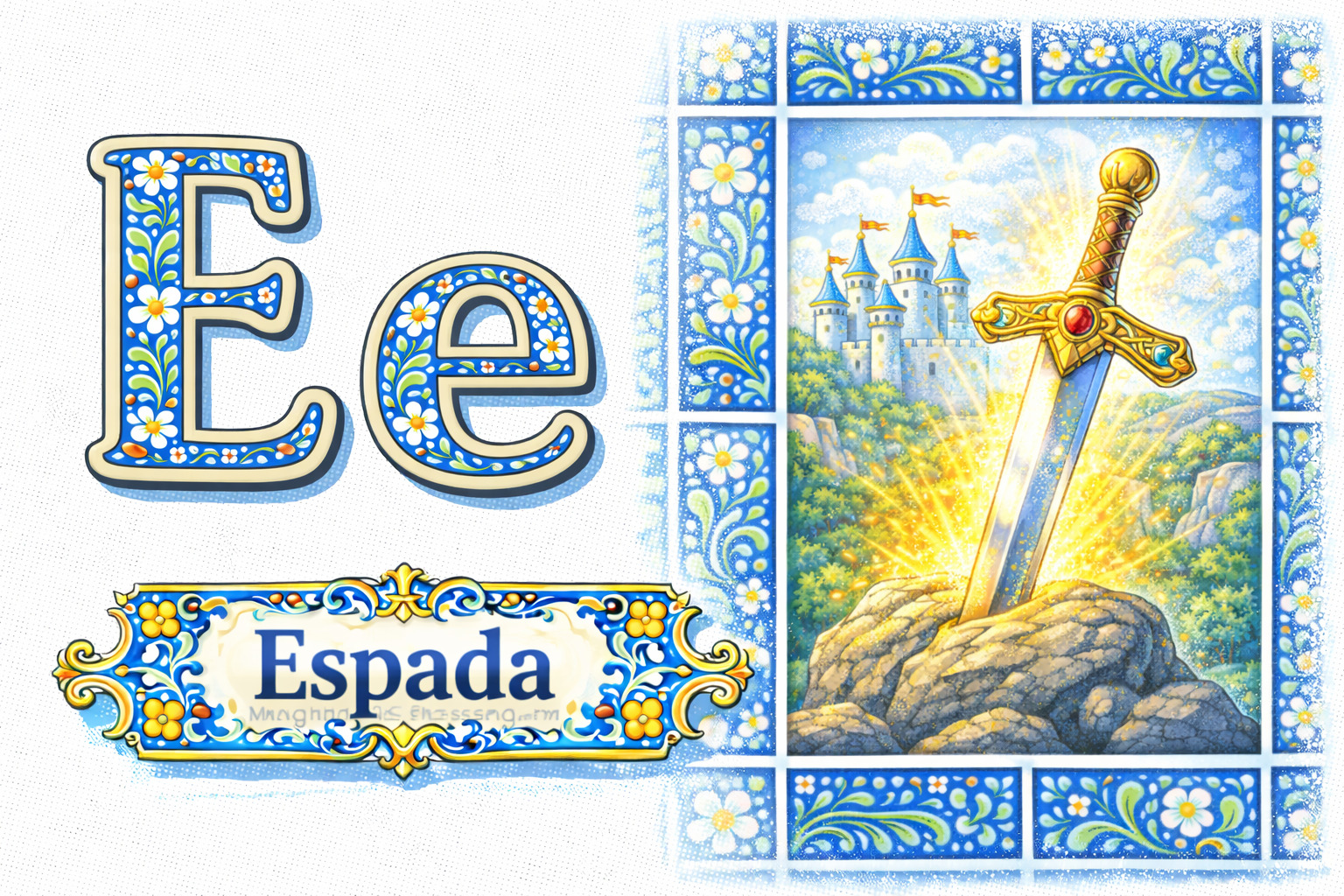
EeEspada
A sword is a long weapon with a handle and a sharp blade, like knights use. In stories, a sword helps fight danger, but a hero’s courage matters most. In Portuguese, the letter E is called “ê” (roughly like “a”).
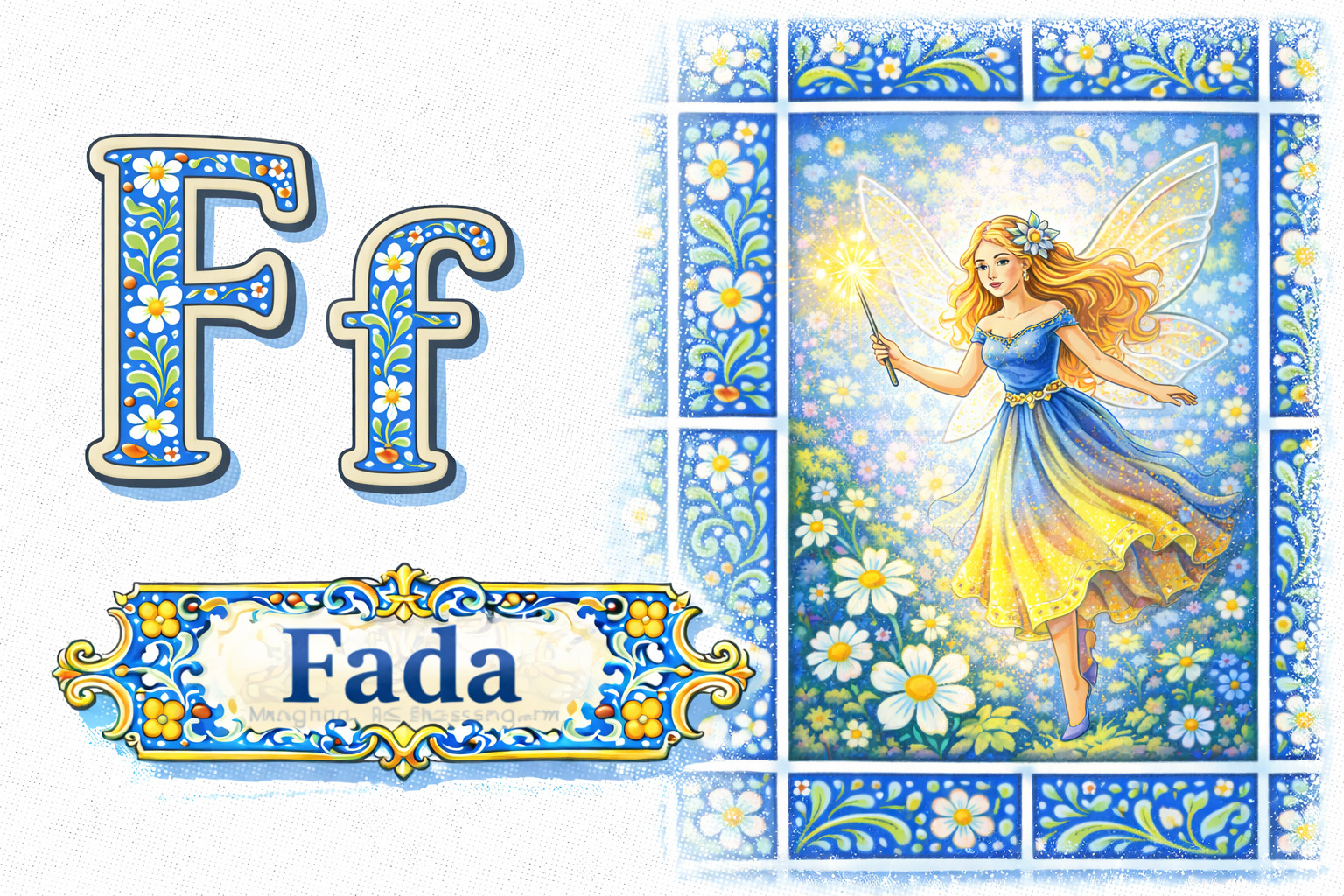
FfFada
A fairy is a tiny magical helper, often with wings and sparkly magic. In stories, a fairy may give advice, a gift, or a little magic dust. In Portuguese, the letter F is called “éfe” (roughly like “efe”).
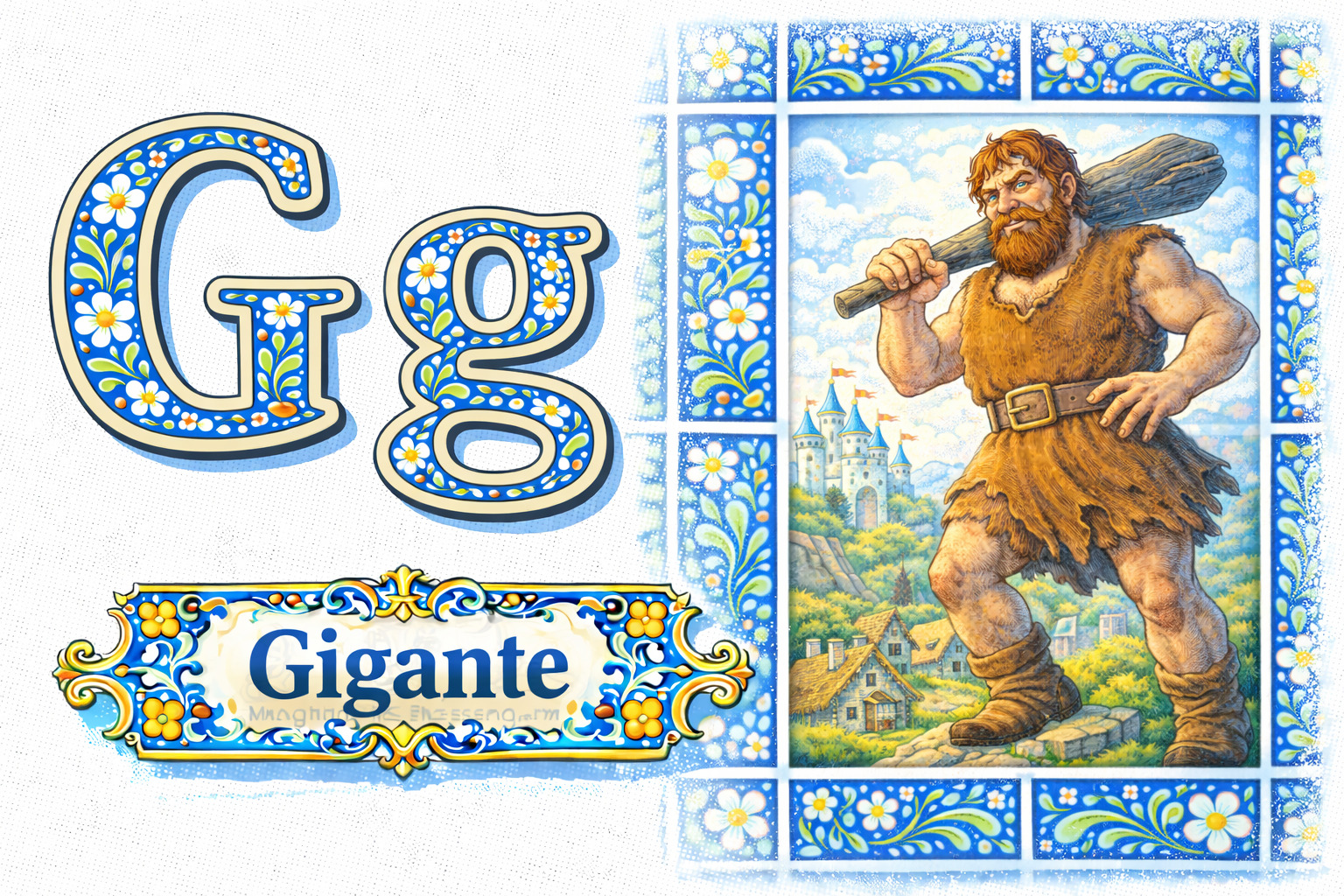
GgGigante
A giant is a very tall, super-strong person from legends. In stories, giants can be scary—or friendly and clumsy. In Portuguese, the letter G is called “gê” (roughly like “je”).
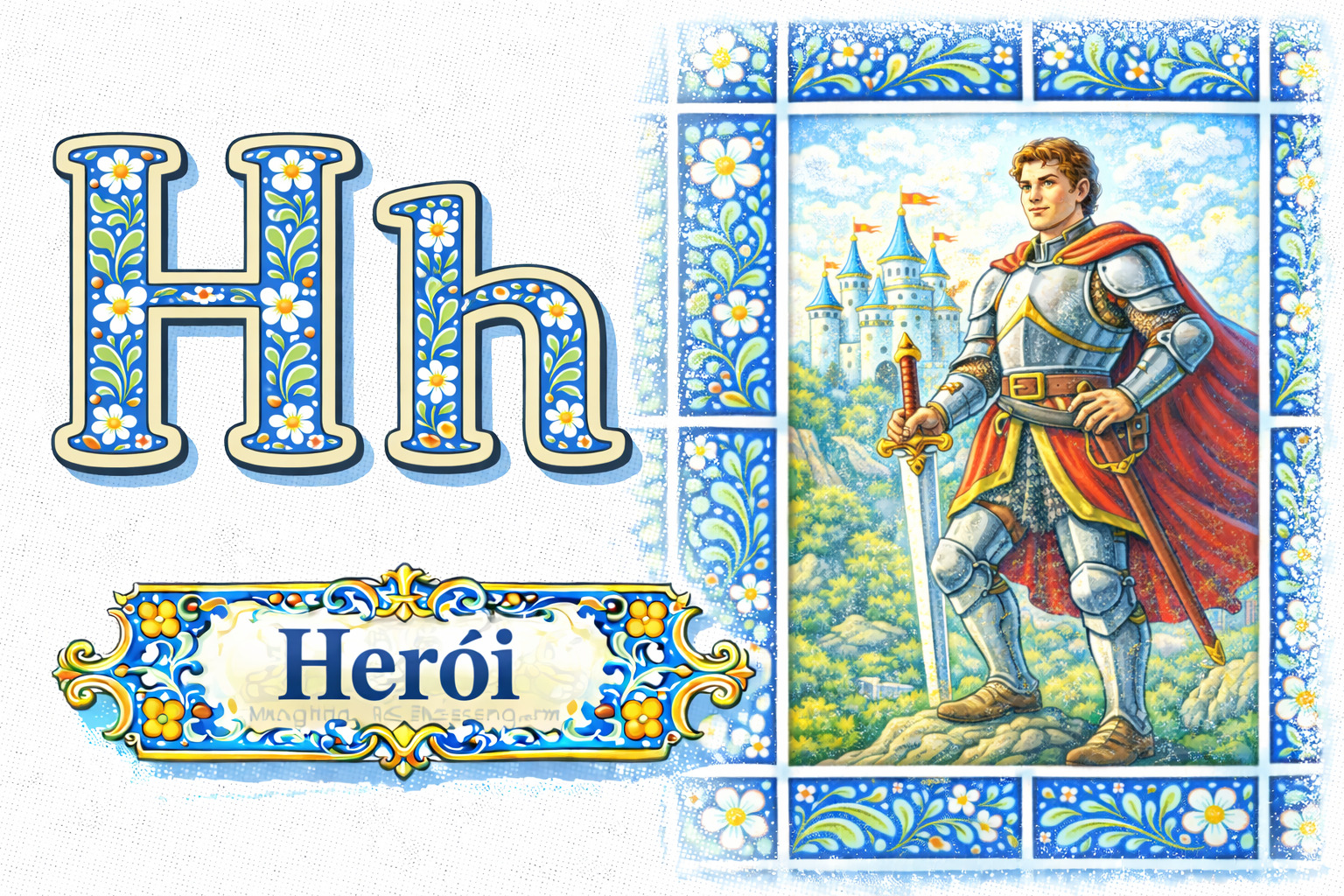
HhHerói
A hero is someone who tries to do the right thing and help others. Heroes aren’t only strong—they’re kind, brave, and they don’t give up. In Portuguese, the letter H is called “agá” (roughly like “aga”).
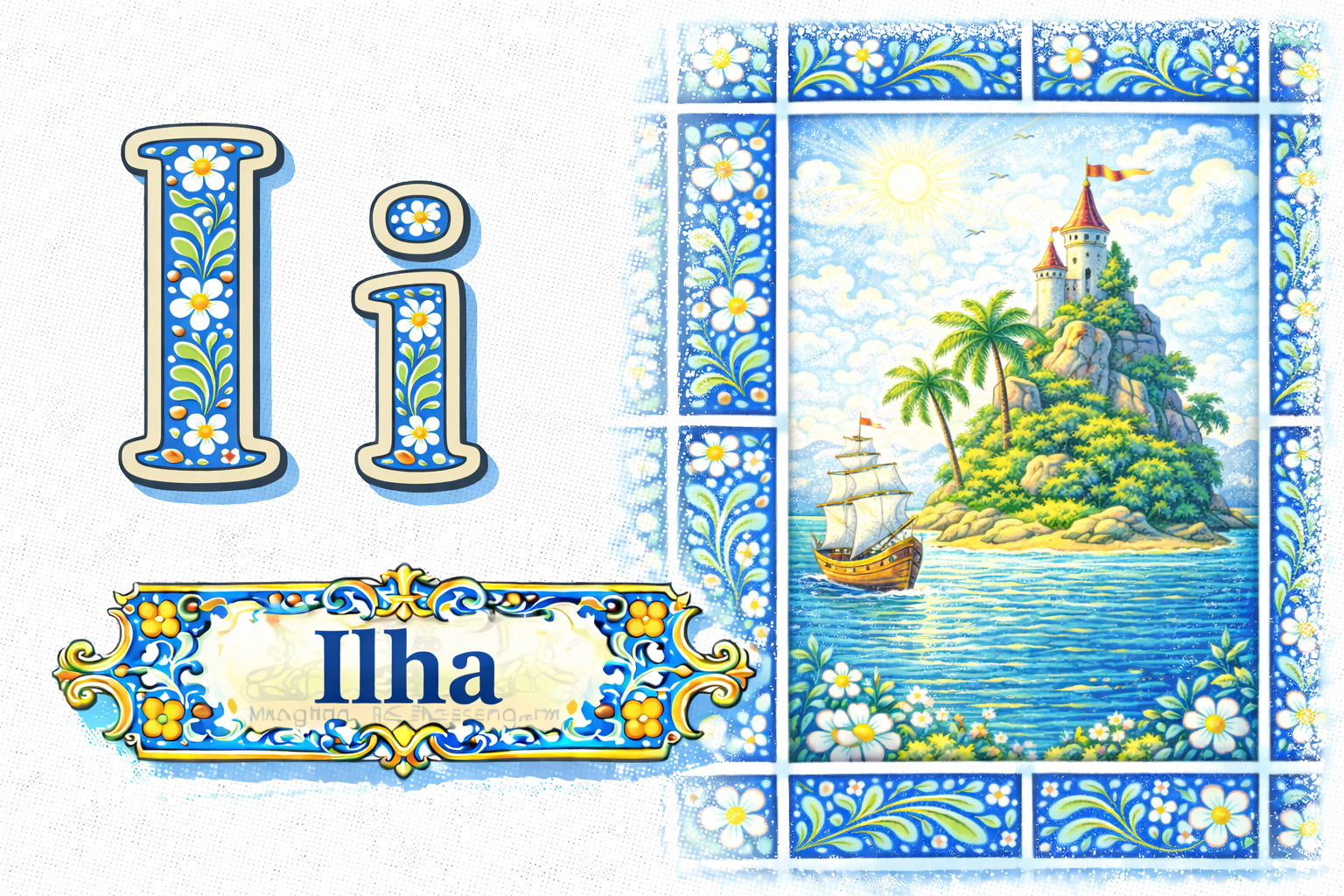
IiIlha
An island is land surrounded by water on all sides. Islands can have beaches, forests, and even secret caves in adventure stories. In Portuguese, the letter I is called “i” (roughly like “e”).
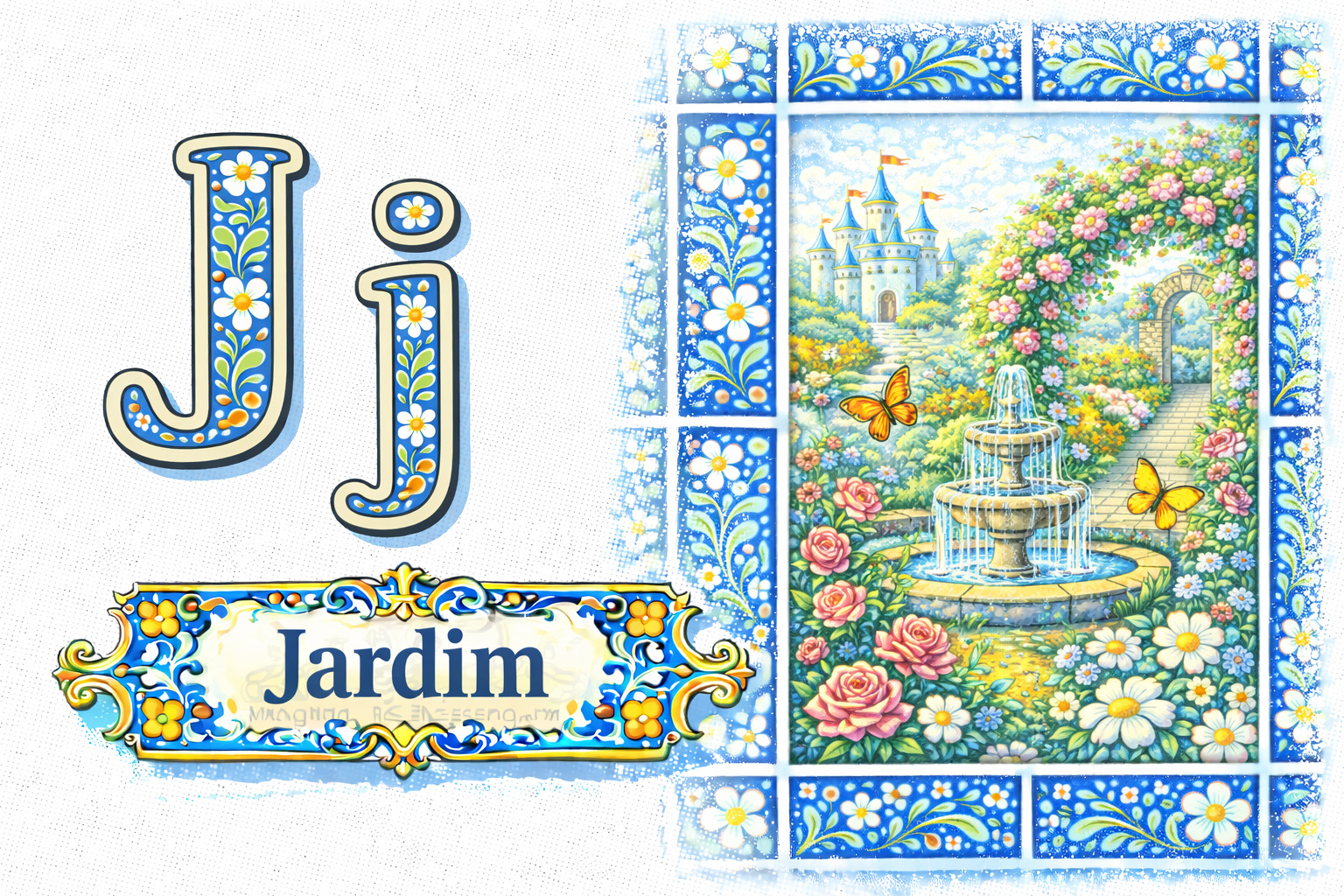
JjJardim
A garden is a place where flowers and plants grow and people take care of them. It’s fun to explore a garden, spot butterflies, and learn about nature. In Portuguese, the letter J is called “jóta” (roughly like “jota”).
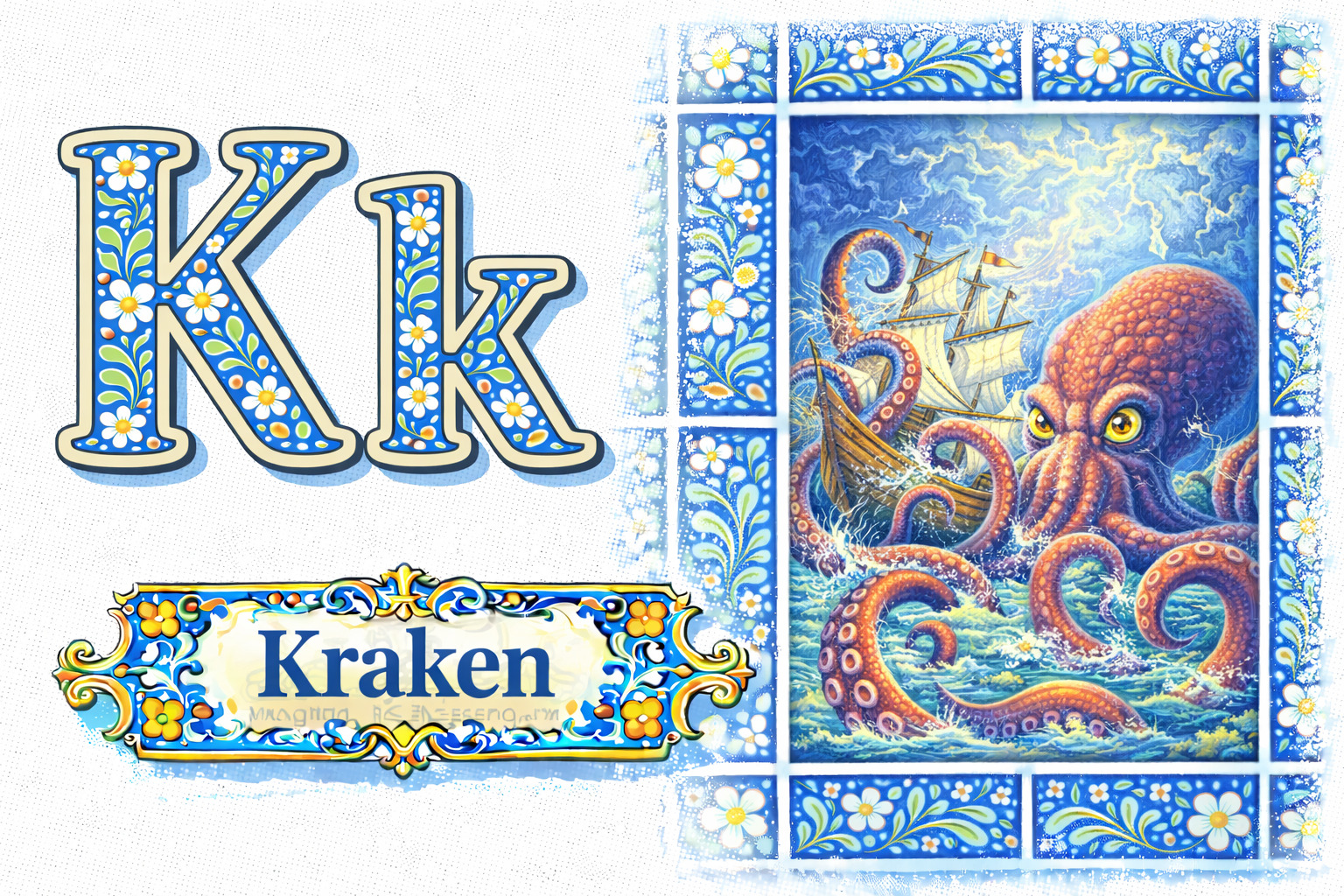
KkKraken
The Kraken is a legendary sea monster with huge tentacles, like a giant octopus. Sailors’ stories say it can rise from deep water and scare even big ships. In Portuguese, the letter K is called “cápa” (roughly like “kappa”).
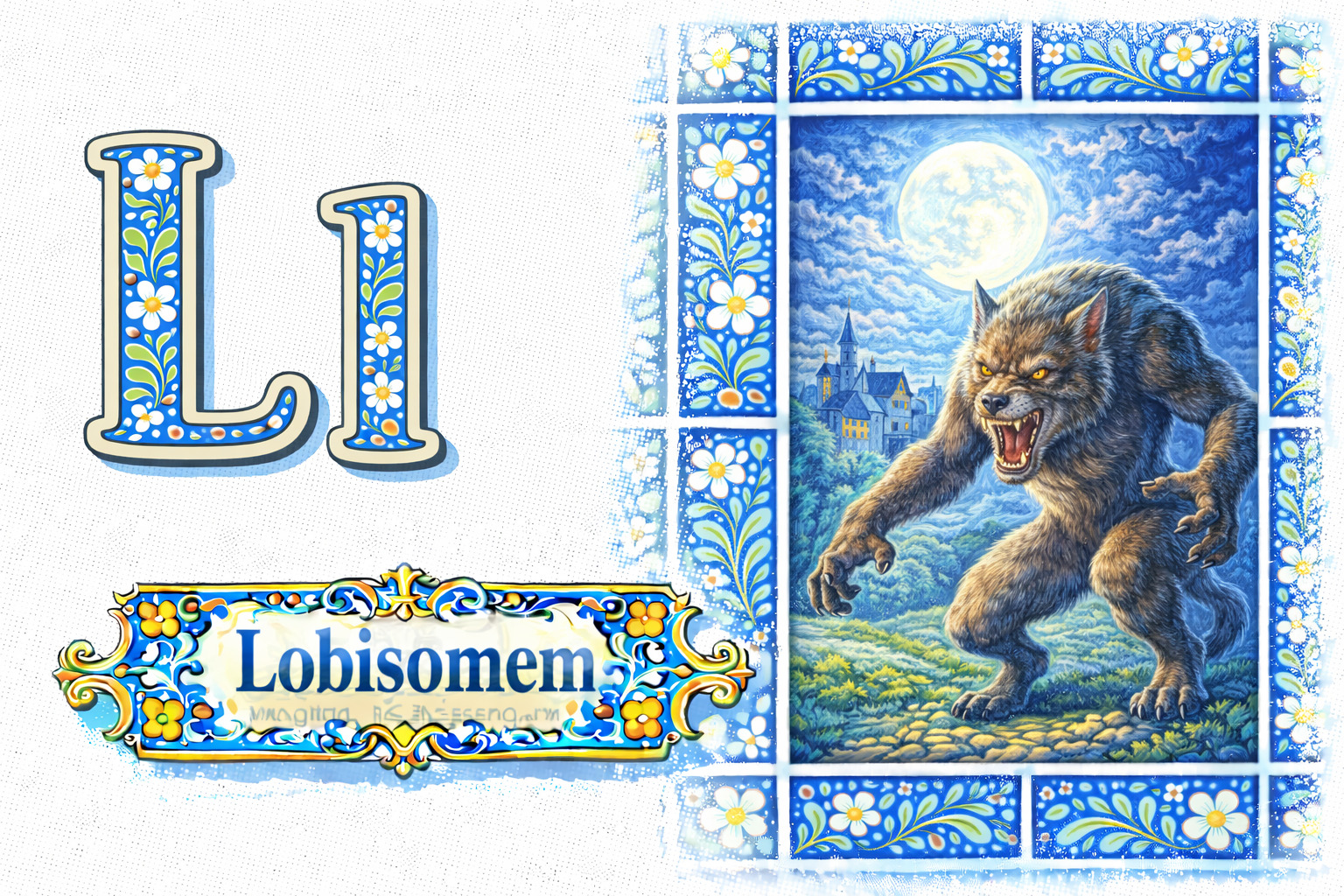
LlLobisomem
A werewolf is a person in stories who can turn into a wolf. It often happens at night, especially under a full moon, with spooky howls. In Portuguese, the letter L is called “éle” (roughly like “ale”).
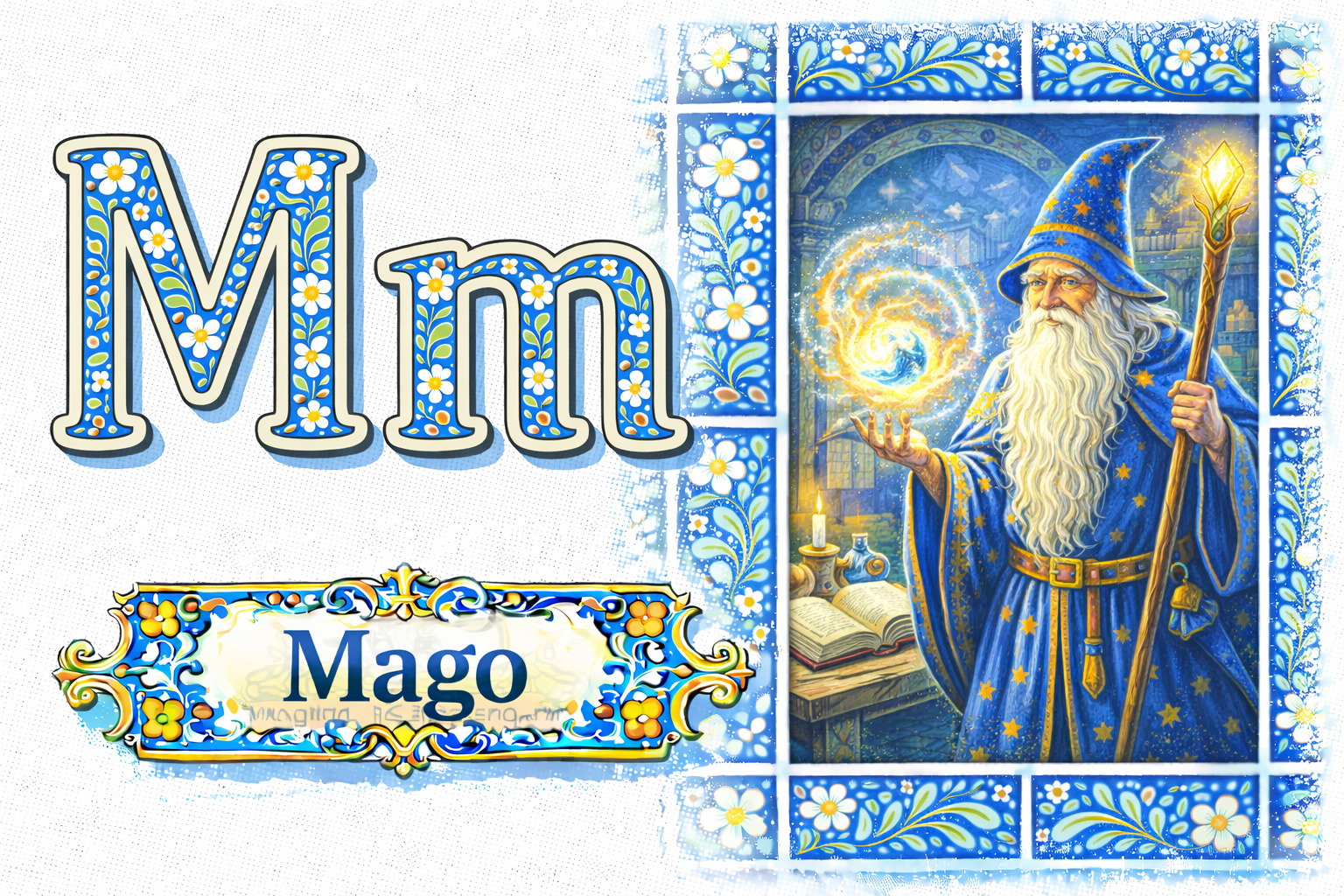
MmMago
A wizard is someone who learns spells and uses magic to do amazing things. In stories, wizards might wear robes, carry a staff, and read ancient books. In Portuguese, the letter M is called “ême” (roughly like “ame”).
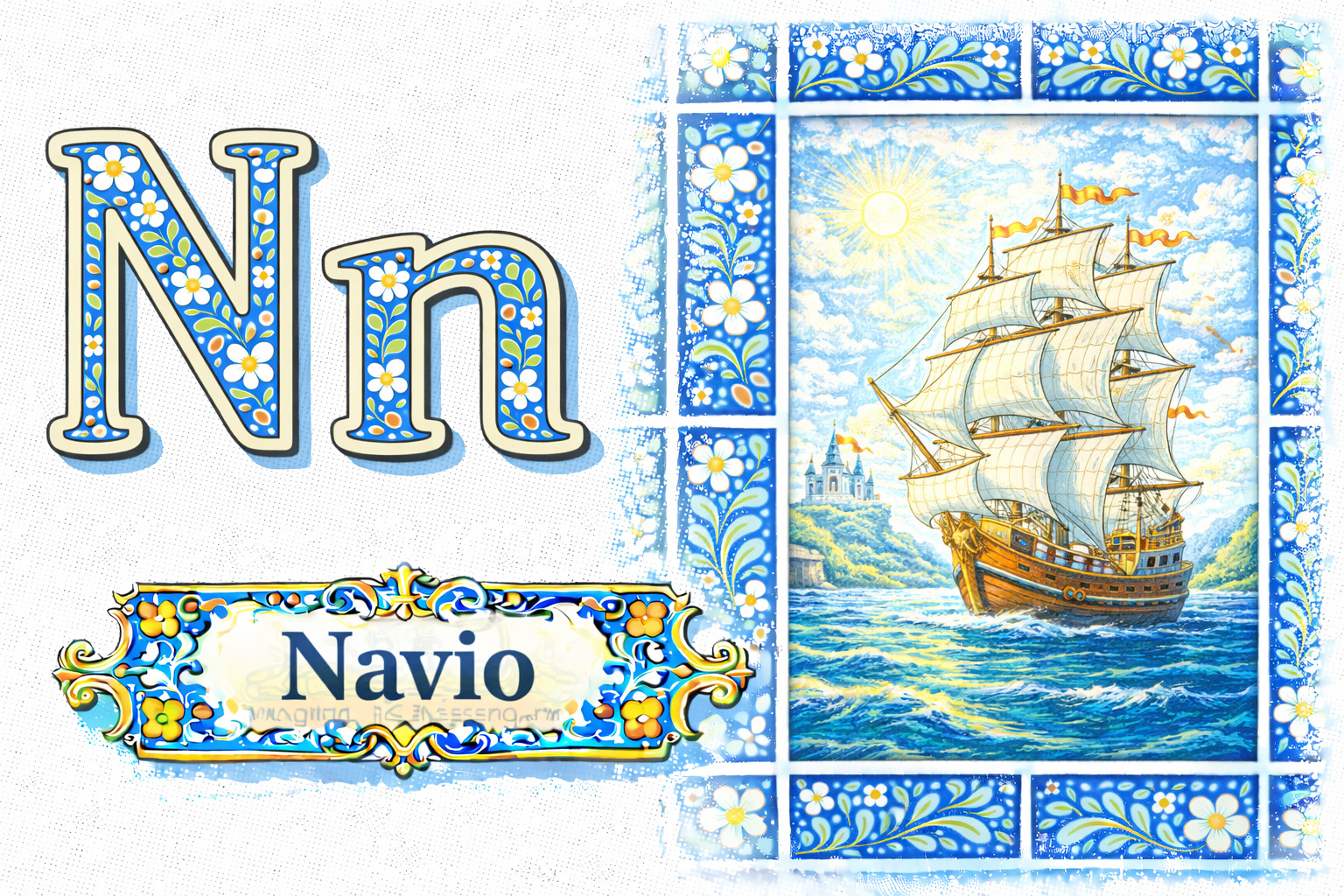
NnNavio
A ship is a big vehicle that travels across the sea or ocean. Ships can have sails or engines, and in stories they carry heroes to adventures. In Portuguese, the letter N is called “êne” (roughly like “ane”).
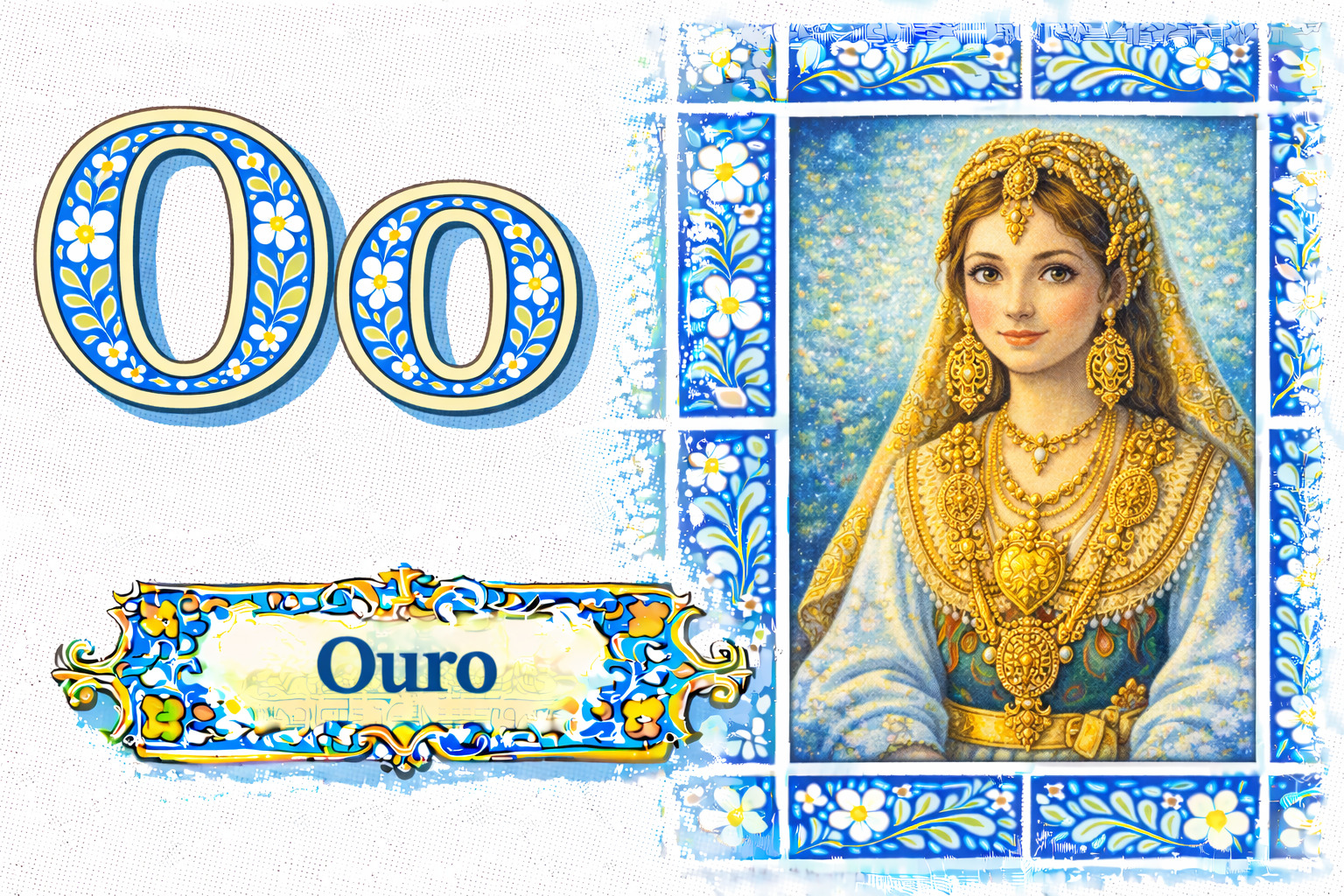
OoOuro
Gold is a shiny, valuable yellow metal. People make coins and jewelry from gold, and story treasure chests are often full of it. In Portuguese, the letter O is called “ó” (roughly like “o”).
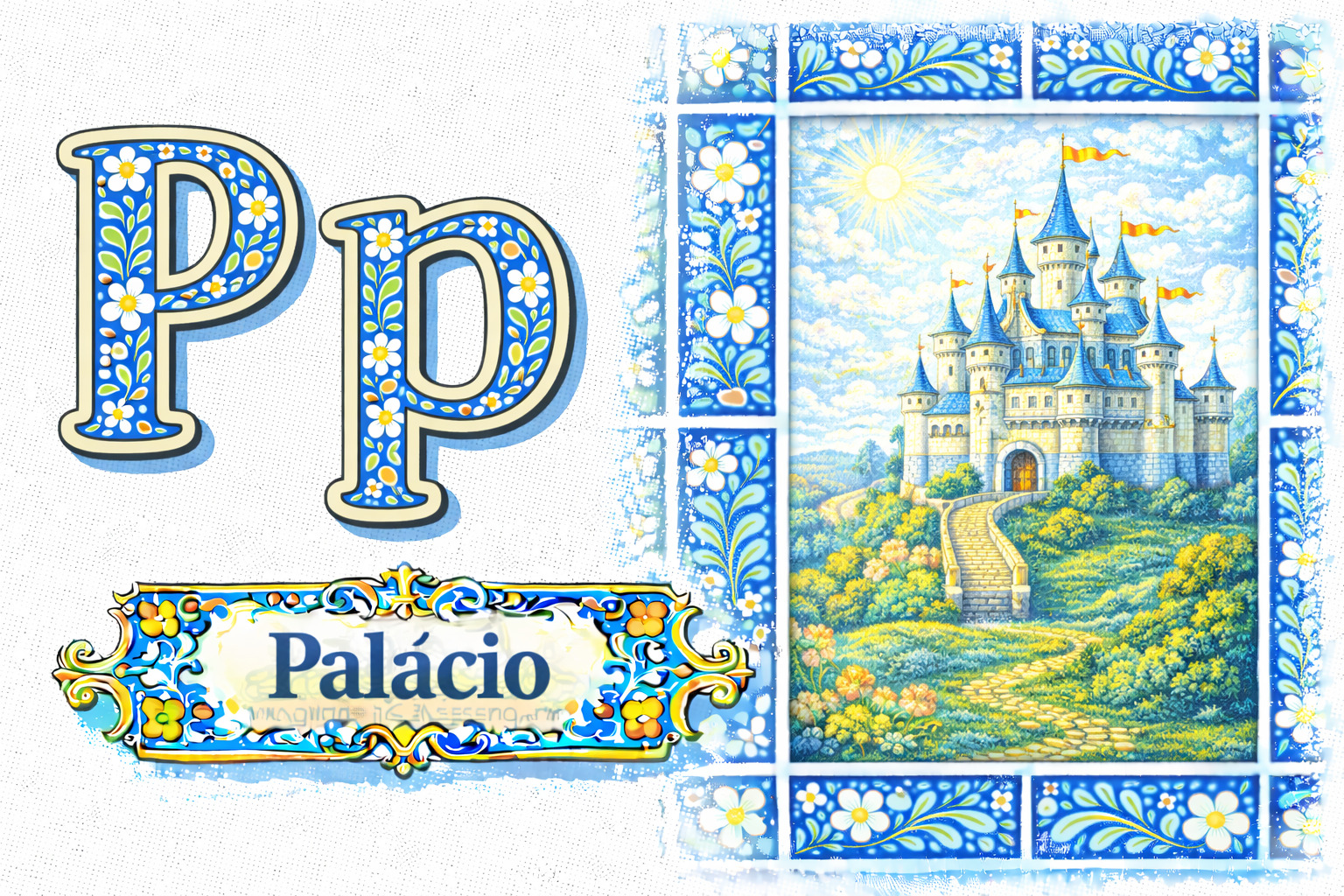
PpPalácio
A palace is a very large, fancy home where a king or queen might live. Palaces have grand rooms and decorations, just like in fairy tales. In Portuguese, the letter P is called “pê” (roughly like “pe”).
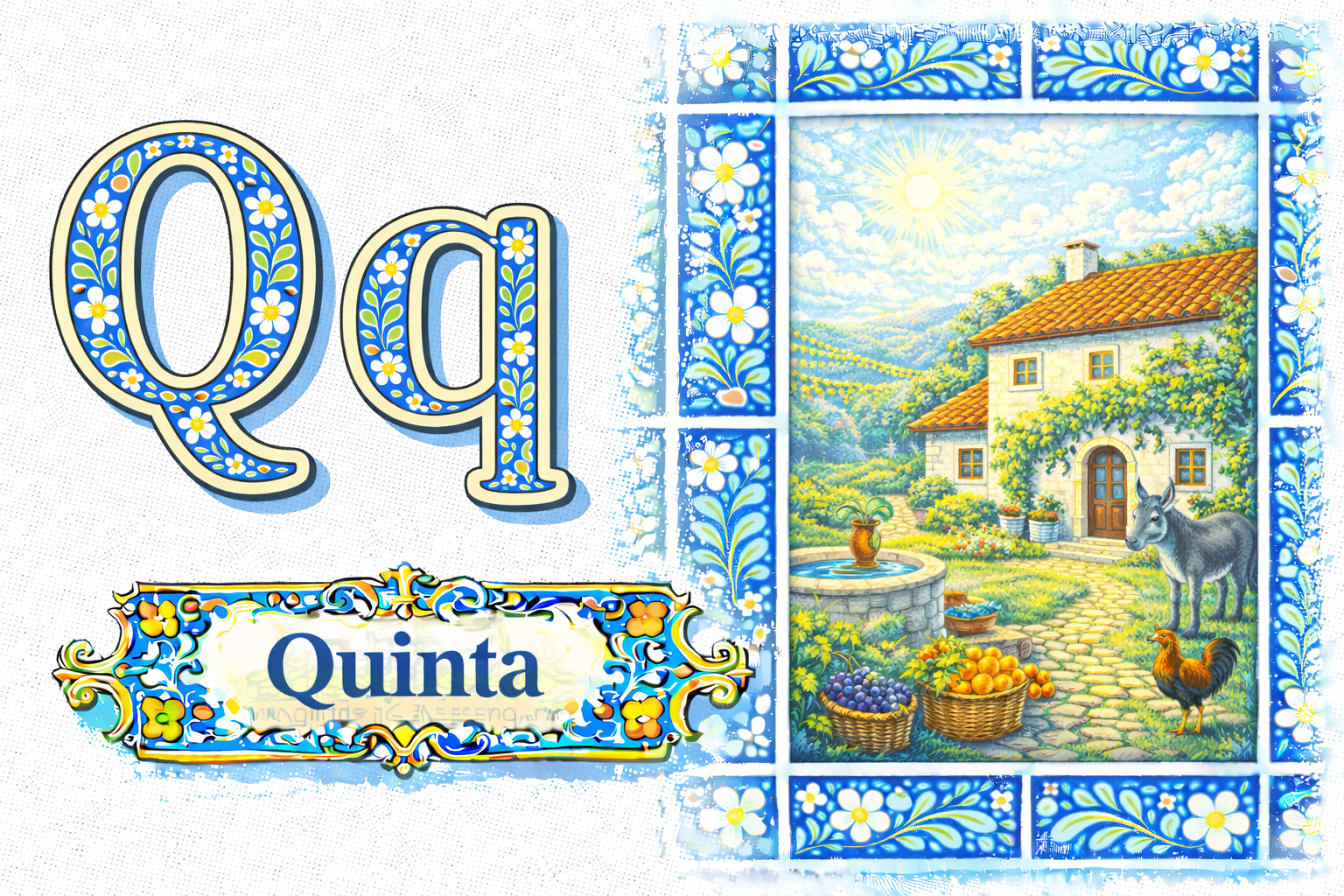
QqQuinta
A quinta is a country house or small farm with fruit trees, gardens, and sometimes animals. In Portugal, “quinta” can also mean Thursday (quinta‑feira), but here it’s the farm. In Portuguese, the letter Q is called “quê” (roughly like “ke”).
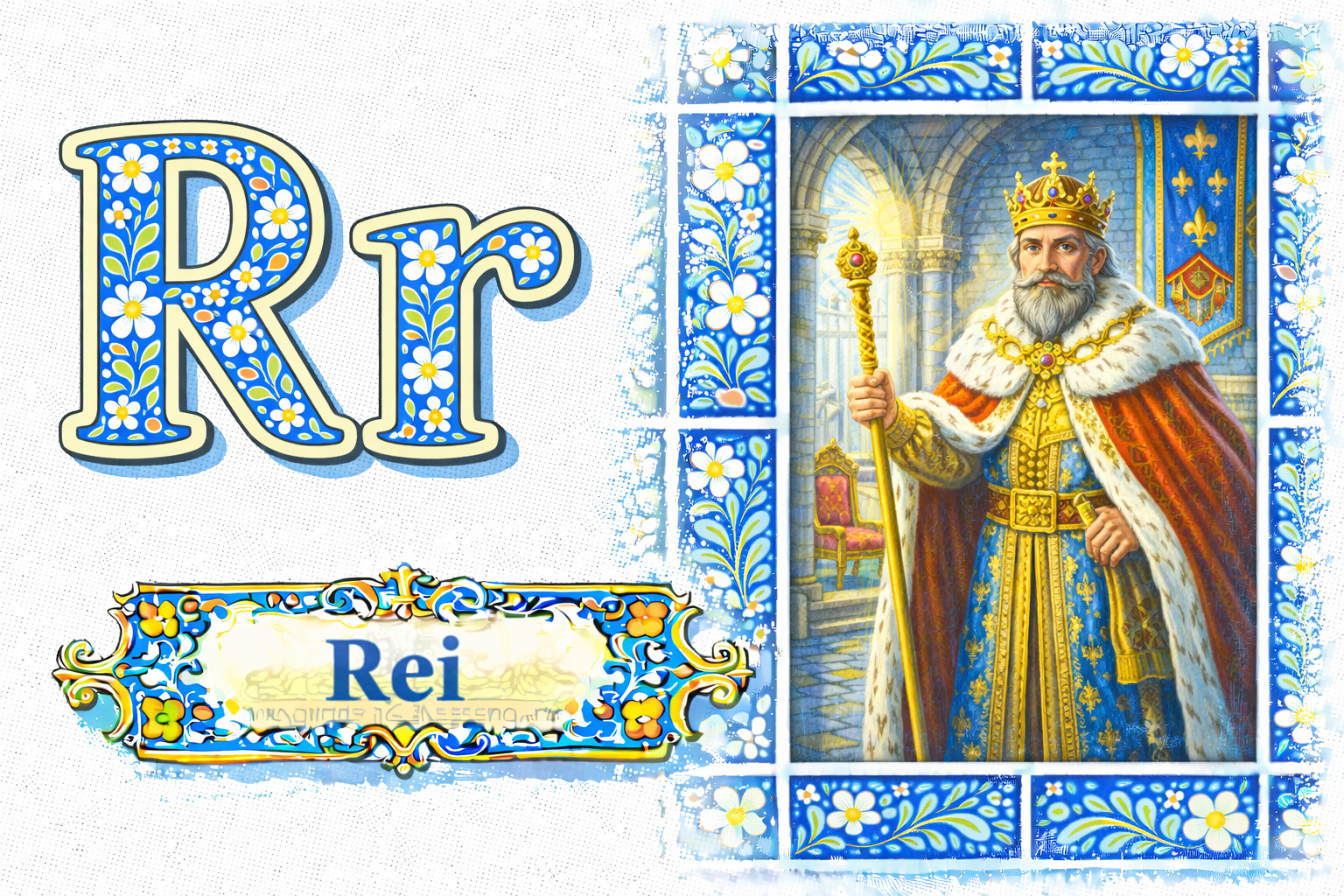
RrRei
A king is the ruler of a kingdom in stories and history. He wears a crown and should be fair so everyone can live well. In Portuguese, the letter R is called “érre” (roughly like “arre”).
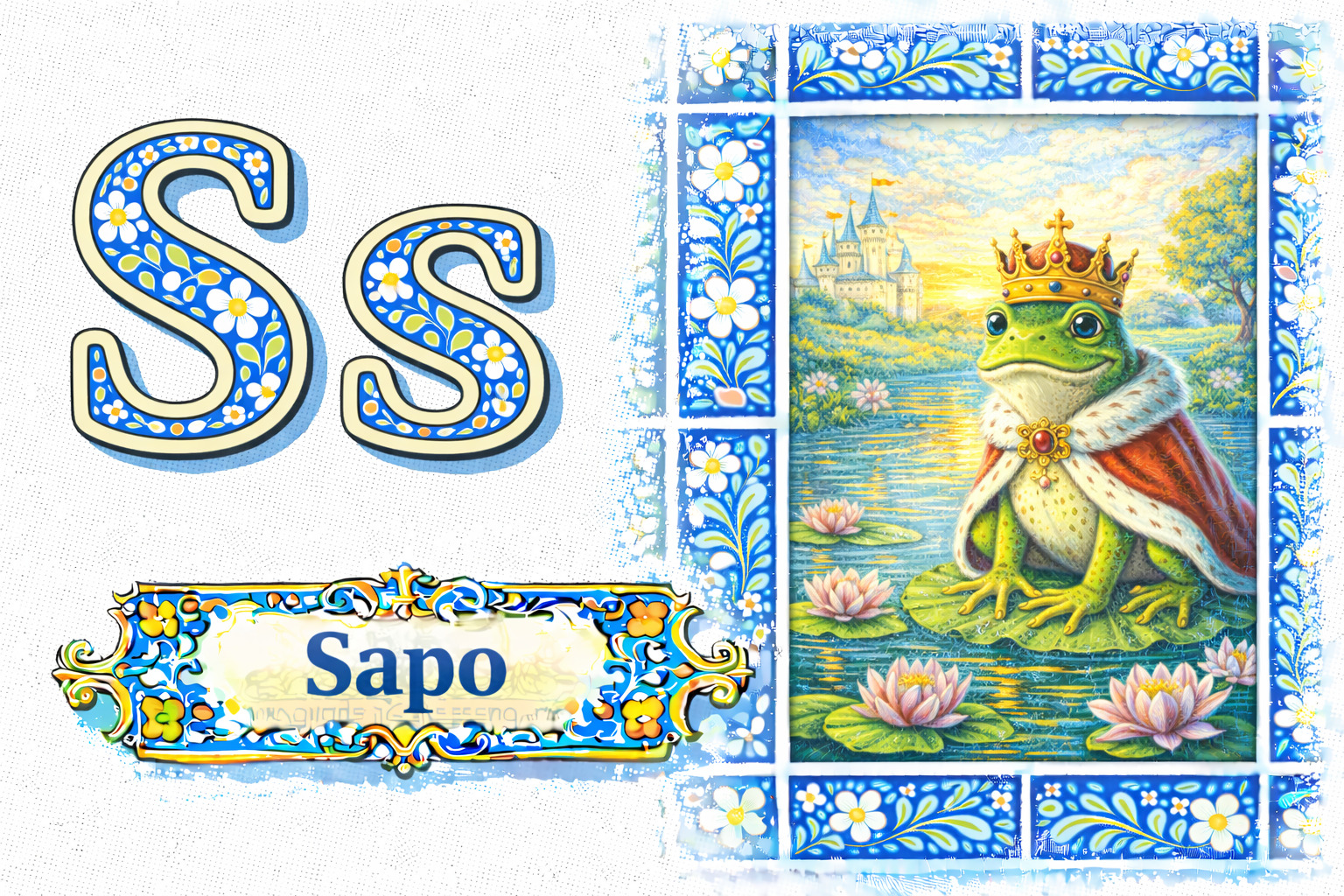
SsSapo
A sapo is a frog or toad that hops and lives near water. It croaks at night and catches bugs with a quick tongue. In Portuguese, the letter S is called “ésse” (roughly like “asse”).
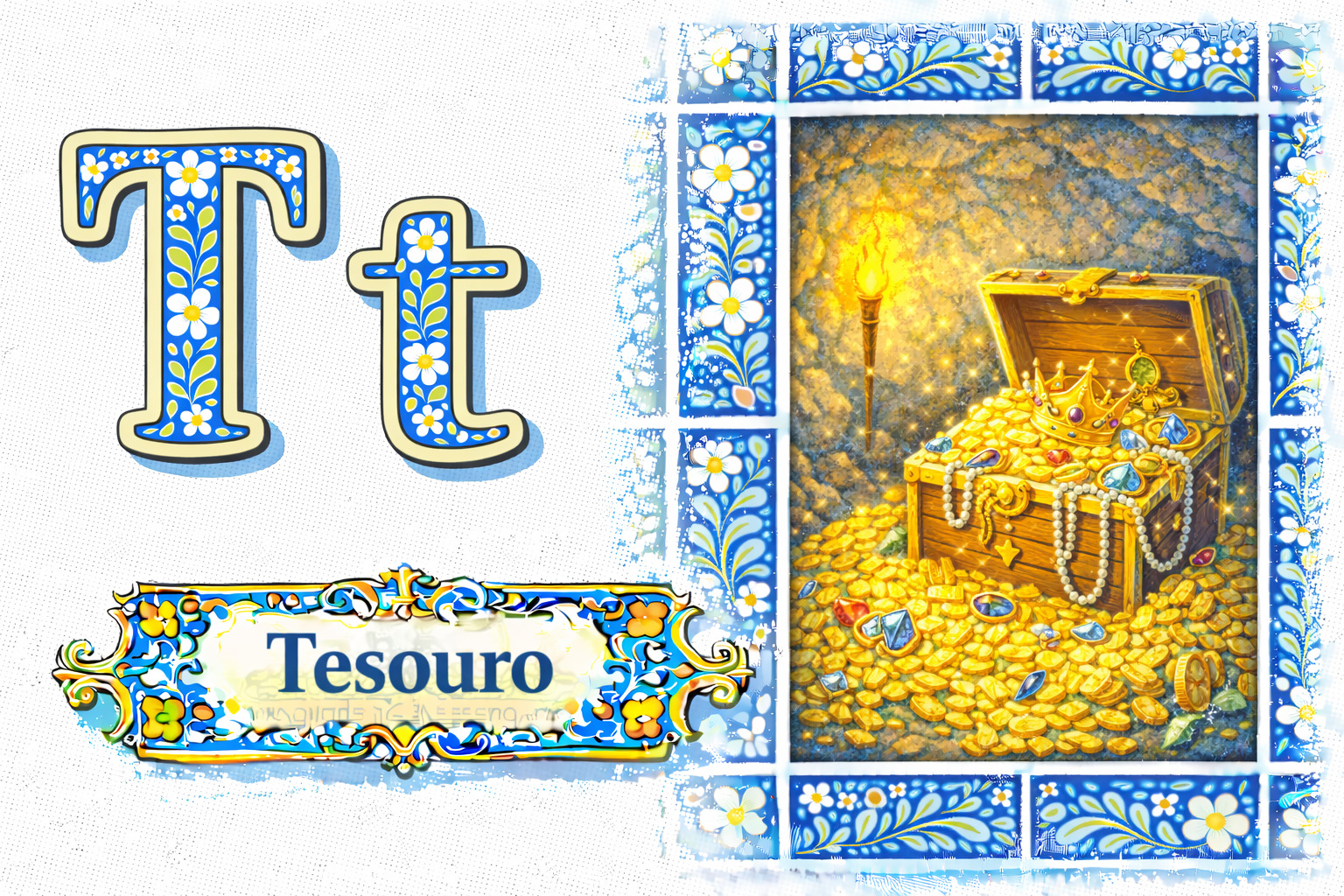
TtTesouro
Treasure is hidden riches—coins, gems, and valuable things. In stories, treasure is found with maps and sometimes guarded by traps or monsters. In Portuguese, the letter T is called “tê” (roughly like “te”).
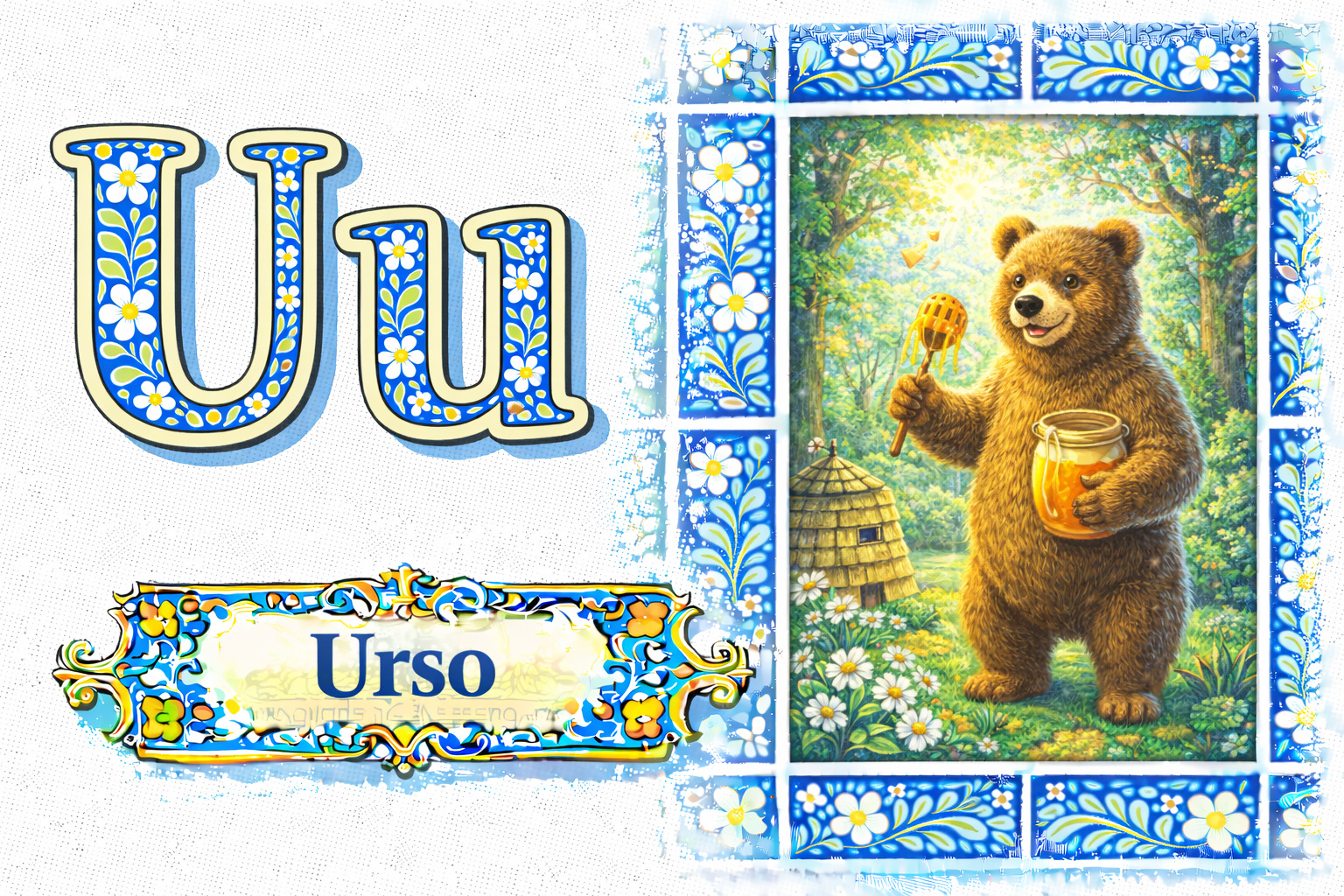
UuUrso
A bear is a big, furry animal that lives in forests or mountains. Bears eat berries and fish, and some take a long winter nap. In Portuguese, the letter U is called “u” (roughly like “wu”).
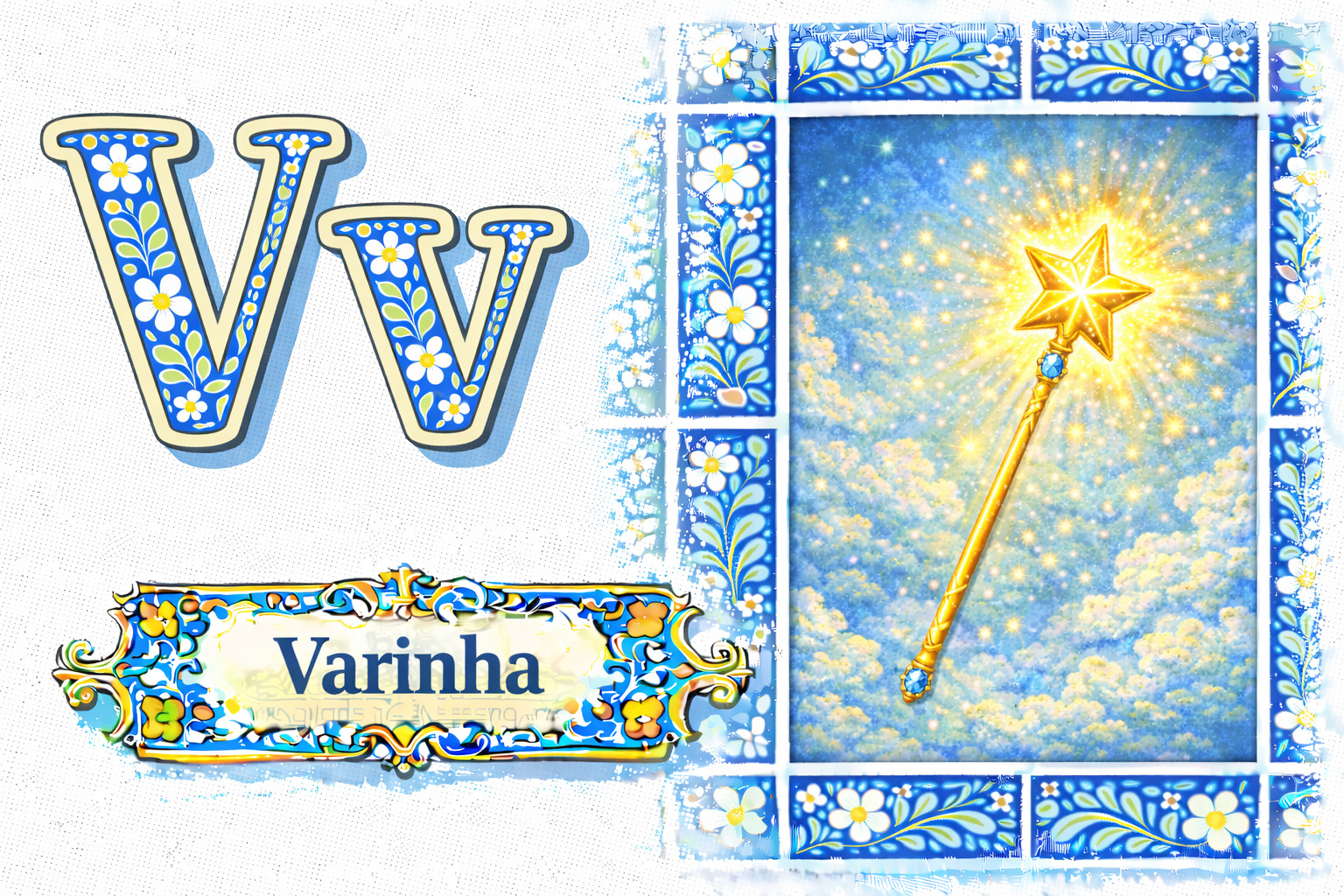
VvVarinha
A magic wand is a small stick you wave to cast spells. In stories, a wand can make light, open doors, or help a hero. In Portuguese, the letter V is called “vê” (roughly like “ve”).
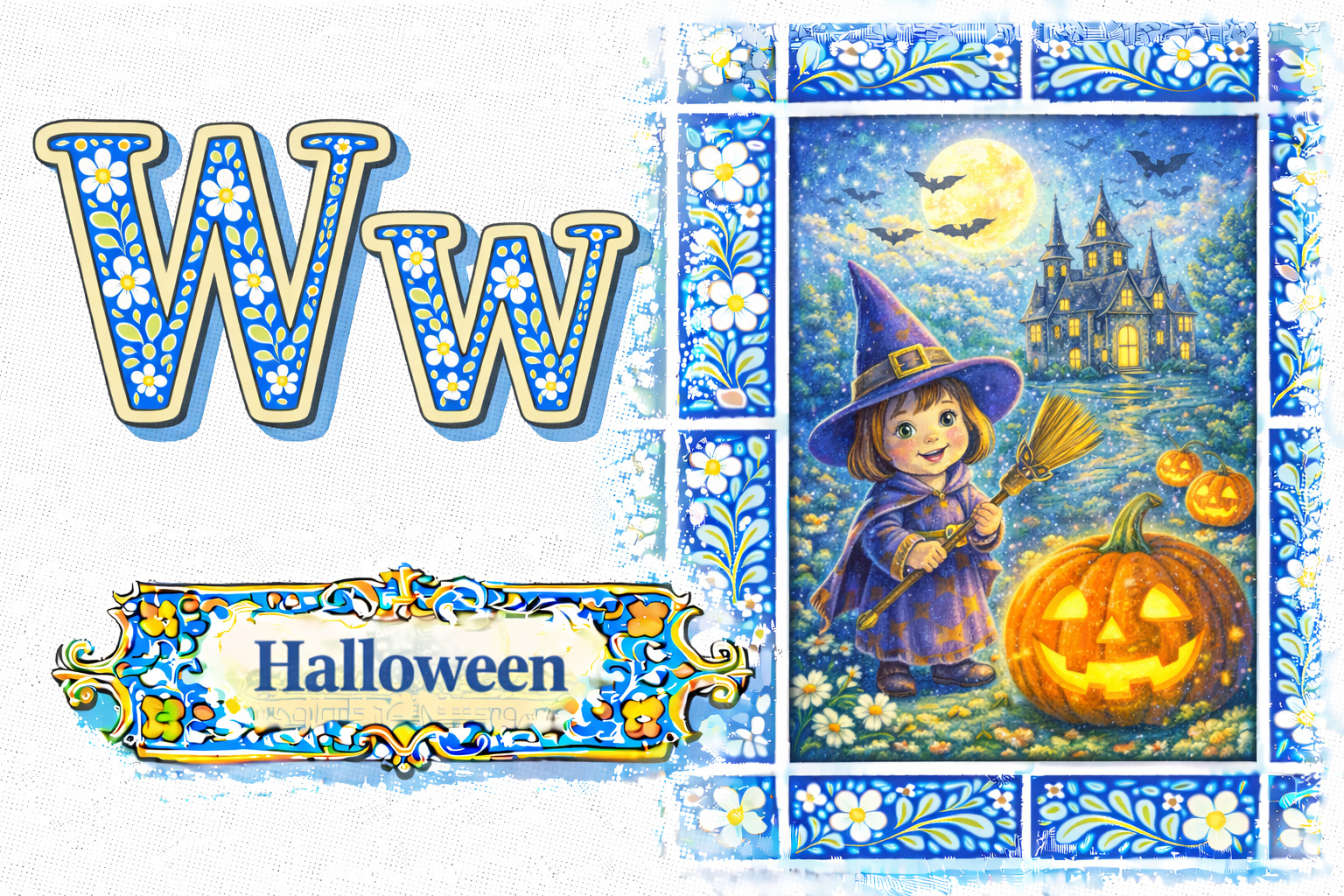
WwhalloWeen
Halloween is a holiday when kids wear costumes and collect candy. You’ll see pumpkins, friendly ghosts, and fun spooky decorations. In Portuguese, the letter W is called “dáblio” (roughly like “double u”).
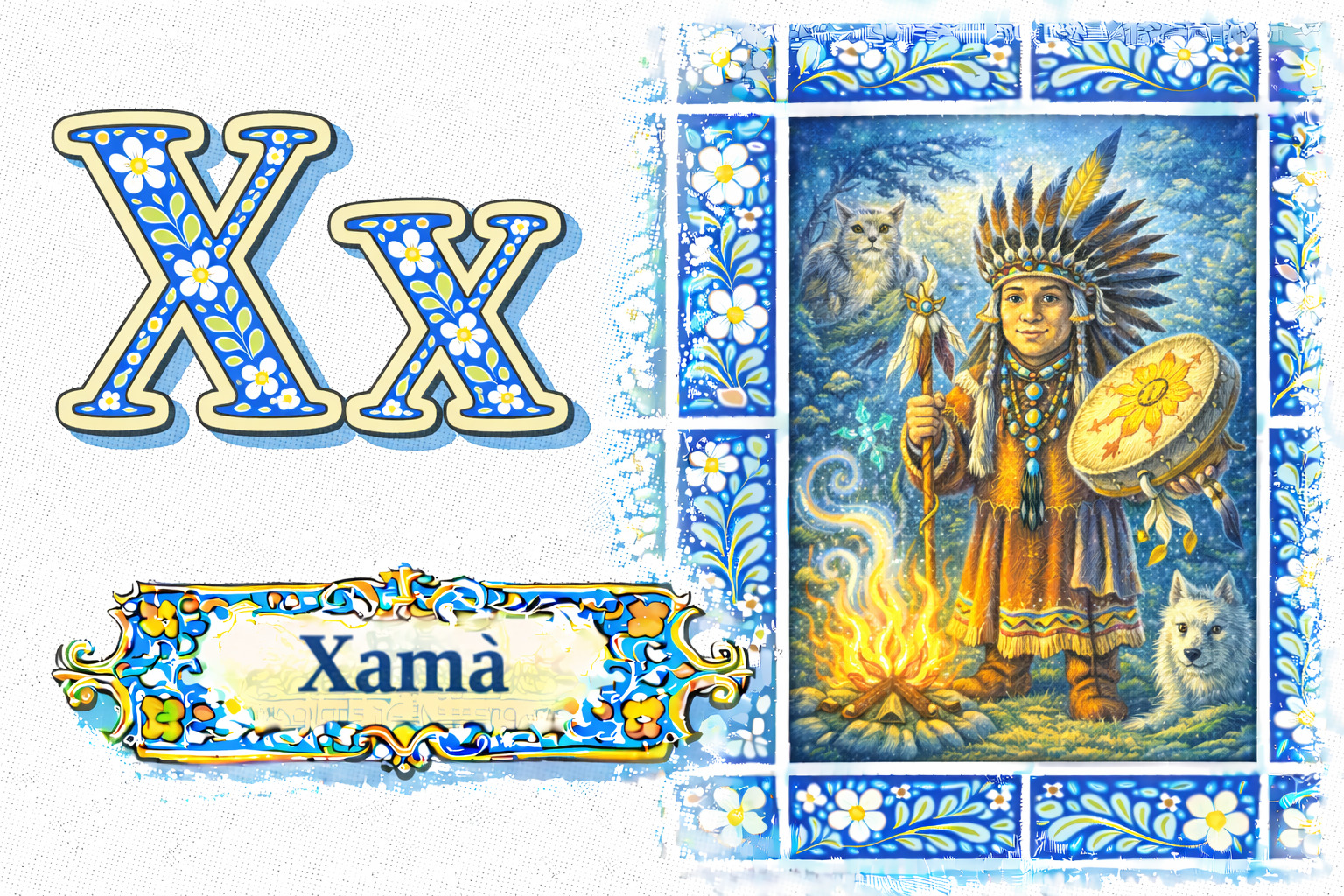
XxXamã
A shaman is a wise spiritual guide in traditional stories. They might drum, tell stories, and help people with old traditions. In Portuguese, the letter X is called “xis” (roughly like “shish”).
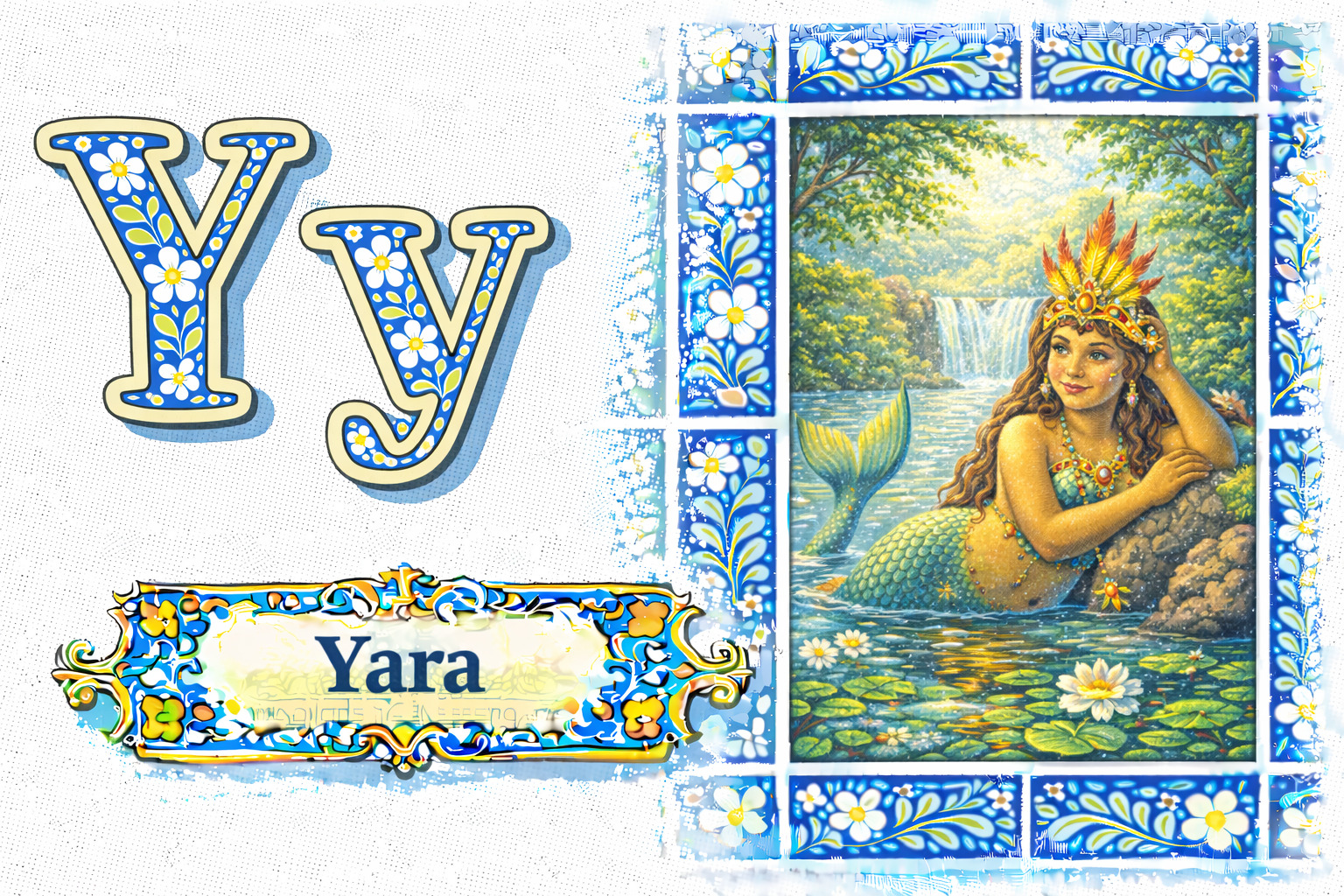
YyYara
Yara is a magical river mermaid from legends who sings enchanting songs. She’s often shown as beautiful and mysterious—sometimes helpful, sometimes tricky. In Portuguese, the letter Y is called “ípsilon” (roughly like “yipsilon”).
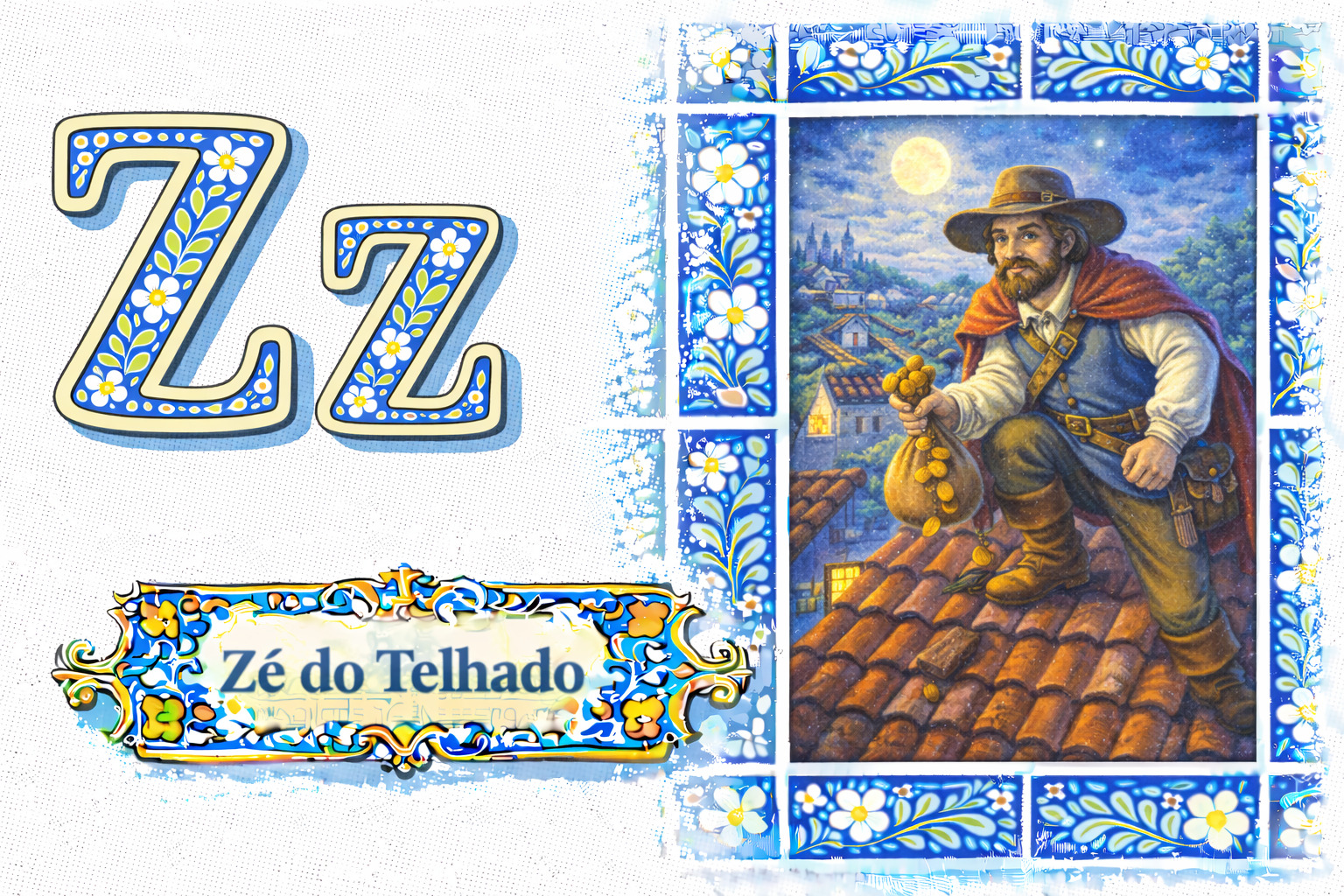
ZzZé do Telhado
Zé do Telhado is a Portuguese folk hero, a bit like Robin Hood. Stories say he was a brave outlaw who tricked the rich and helped the poor. In Portuguese, the letter Z is called “zê” (roughly like “ze”).
The End
O Livro do Alfabeto
1/27
Click on page edges or use arrow keys to turn pages